
It was a protest which held a mirror to the government of a state taking pride in its commitment to democracy, gender equality and social indices.One person, who in his employed days had known governments and political parties at close quarters, told me that public perception of how the Kerala government handled the ASHA workers' strike had been terrible, reports Shyam G Menon.

Whether it's Carrefour, Ford, or other foreign majors, they are ready to adjust their strategies and design their plans in a way that would address the Indian consumption story.

The primary market is expected to remain vibrant, with at least 10 companies, including supermart major Vishal Mega Mart and Blackstone-owned diamond grading firm International Gemmological Institute (India) Ltd expected to raise a combined Rs 20,000 crore in the next month, merchant bankers said. Education-focused NBFC Avanse Financial Services, TPG Capital-backed Sai Life Sciences, hospital chain operator Paras Healthcare, and investment bank DAM Capital Advisors are also among the companies planning to launch their IPOs in December, they added. The companies aim to raise a total of Rs 20,000 crore through their public offerings.

Retail inflation hit an eight-month high of 6.07 per cent in February, remaining above the RBI's comfort level for the second month in a row, while wholesale price-based inflation soared to 13.11 per cent on account of hardening of crude oil and non-food item prices, government data showed on Monday. The previous high for retail inflation was 6.26 per cent in June 2021. The consumer price index (CPI) based retail inflation, which is taken into account by the Reserve Bank of India (RBI) while deciding its monetary policy, rose mainly because of costlier food items, as per the data released by the National Statistical Office (NSO).

From Sensex firms, Tech Mahindra, Mahindra & Mahindra, Tata Motors, UltraTech Cement, Tata Consultancy Services, HCL Technologies, ICICI Bank and Tata Steel were the biggest gainers. Sun Pharma emerged as the only laggard.

In a bid to gain a bigger share of the customer's wallet, banks are ramping up their cross-selling initiatives.

The retail inflation rate breached the 6 per cent upper tolerance limit of the RBI for the first time in seven months in January, while the wholesale price index stayed in double-digits for the 10th month in a row, showed two sets of data released by the government on Monday. Retail inflation, the key input for the RBI while reviewing the repo rate every two months, soared during the month mainly because of a spike in certain food items. The previous high for retail inflation was 6.26 per cent in June 2021.

Quarterly earnings from corporates, the US Fed interest rate decision and other global trends will be the major driving factors for determining movement in the domestic equity market in a holiday-shortened week ahead, analysts said. Besides, factors like trading activity of foreign investors, global oil benchmark Brent crude and rupee-dollar trend would also influence trading.

Benchmark equity indices Sensex and Nifty reversed their early gains to close lower on Wednesday due to selling in oil & gas, banking and IT stocks amid weak trends in European markets. The 30-share BSE Sensex declined by 372.46 points or 0.69 per cent to close at 53,514.15, extending its falling streak to a third day. The index opened higher and touched the day's high of 54,211.22 amid gains in Asian markets.

The current spurt in the stock market is on account of strong fundamentals and robust corporate earnings and retail investors can look for buying opportunities to accumulate quality stocks, experts said.

Operating margins have been the primary driver of corporate earnings in India in recent quarters, despite revenue growth suffering from weak consumer demand. Companies across sectors have reported a sharp improvement in earnings before interest, tax, depreciation, and amortisation (Ebitda) margins over the past two years, benefiting from lower commodity and energy prices. Higher margins more than compensated for slower revenue growth, resulting in double-digit growth in net profit for five consecutive quarters.
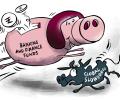
Companies in the banking, finance sector and insurance (BFSI) sector have underperformed on the bourses despite leading the earnings growth charts in the post-pandemic period. This has created a dichotomy between their earnings and share prices. BFSI companies have never been less expensive than the rest of the equity market.

Market players attribute the rally in small and midcaps to flows from retail investors and domestic institutions.

Commerce and Industry Minister Piyush Goyal on Wednesday questioned Amazon's announcement of $1 billion investment in India, saying the US retailer was not doing any great service to the Indian economy but filling up for the losses it had suffered in the country. He said that their huge losses in India "smells of predatory pricing", which is not good for the country as it impacts crores of small retailers.

With new eligibility criteria for futures and options (F&O) coming into effect, Jio Financial Services and Zomato are strong contenders for inclusion in the derivatives segment, according to an analysis by Nuvama Alternative & Quantitative Research. The report suggests that these new F&O inclusions could also propel these two companies into the benchmark National Stock Exchange Nifty 50 during the March rebalancing.

In the months immediately following the 2024 tragedy, reporting on the landslide per se had been a straightforward affair. On one side was death and destruction. On the other side, survivors and the business of survival. It was black and white. What direction to take was clear. Rehabilitation in comparison, felt like a complex situation. One that is fraught with shades of grey. As grey as human life, explains Shyam G Menon.

Geopolitical events, macroeconomic data and quarterly earnings of corporates would guide the stock market in a holiday-shortened week ahead, analysts said. Stock markets will remain closed on Wednesday for Ram Navami. "This week promises to be crucial for the market as fresh worries about a potential conflict between Iran and Israel emerge.

Benchmark indices bounced back on Wednesday after a two-day decline, with the Sensex and Nifty climbing nearly 1 per cent each, tracking a positive trend in European markets. Buying in IT and bank stocks also supported the recovery in equities. The 30-share BSE benchmark jumped 547.83 points or 0.99 per cent to settle at 55,816.32.

Stock markets would take cues from the biggest event of the week -- the US Fed interest rate decision, besides tracking the trends in global markets and trading activity of foreign investors, analysts said. Last week, a heavy decline in smallcap, midcap firms, foreign fund outflows and elevated crude oil prices in the international market dented investors' sentiments. Experts said equity markets may remain volatile in the near-term amid a host of global central bank's monetary policy decisions lined up during the week.

Flush with liquidity, banks are eager to lend. And, therein lies the problem, warns Tamal Bandyopadhyay.

The Adani family, led by Chairman Gautam Adani, is the most valued first-generation family business at Rs 15.44 trillion.

Worries related to the Iran-Israel conflict, quarterly earnings and foreign investors' trading activity are the key factors that would dictate stock markets this week, analysts said. Besides, trends in Brent crude oil and movement of the rupee against the dollar will also be crucial factors. This week will be crucial for the market amid ongoing worries about the conflict between Iran and Israel, said Pravesh Gour, Senior Technical Analyst, Swastika Investmart Ltd.

From the Sensex basket, Maruti, Mahindra & Mahindra, NTPC, JSW Steel, Larsen & Toubro, Reliance Industries, Axis Bank, and Power Grid were the major gainers. Nestle, Wipro, Tata Consultancy Services, HDFC Bank, Titan, HCL Technologies and Infosys were the laggards.
Quarterly earnings, global trends and trading activity of foreign investors will drive stock markets in this holiday-shortened week, analysts said. It will be a trading holiday on January 22, with the Maharashtra government announcing a holiday in connection with the consecration of the Ram Temple in Ayodhya. Equity markets would also remain closed on Friday for Republic Day.

Are you a first-time IPO investor? Even if IPOs appear attractive with expectations of high returns, they come with risks and complexities, cautions Sheetal Jhaveri and shares her checklist to help you navigate through the world of IPOs

'We expect market consolidation and recommend buying during market dips.'
Indian stock markets are expected to be driven mostly by global factors this week amid a lack of local triggers and earnings season largely coming to an end, say analysts. Crude oil prices, rupee movement and US Federal Reserve meeting minutes to be released this week will also influence the market sentiment. "With the earnings season behind us, global cues would largely dictate the trend in the coming week," Ajit Mishra, SVP - technical research, Religare Broking Ltd, said.

'The real repo rate is very high in terms of core inflation.'

After a sharp fall in the share prices of HDFC Bank and other private sector lenders in the past three days, the BFSI (banking, financial services and insurance) sector weighting in the Nifty50 has slipped to a seven-year low of 32.03 per cent, down from nearly 36.6 per cent at the end of March 2023 and 34.5 per cent at the end of December 2023.

'A 10 to 15 per cent allocation to gold in portfolios reduces risk without compromising on potential returns.'

Global trends, macroeconomic data announcements and the start of the earnings season would be the major drivers for the equity markets in a holiday-shortened week, analysts said. Equity markets will remain closed on Thursday for Eid-Ul-Fitr. Trading activity of foreign investors, rupee-dollar trends and crude oil prices would also guide trends in markets.

'If their allocation to certain segments have become high due to strong returns over the past three-four years, they should rebalance their portfolios and bring them in line with their long-term asset allocation.'

'India's top companies currently lack the organisational wherewithal to hire and train 2 million interns annually, given their current scale of operations and existing employee base.'
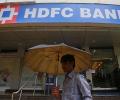
While HDFC Bank has vowed to recoup its lost market share in the credit card segment in three to four quarters by aggressively sourcing new cards, brokerages believe it is a little hard to come by, given how competitive the landscape has become, with other players in the market becoming equally aggressive to gain market share. Kotak Institutional Equities in its report on Monday said, "We would like to believe that the recovery in market share is likely to be gradual, if any. "All the key players, including Axis Bank, are now willing to expand their credit card portfolios as they have tested quite well against Covid-19."

Credit-to-deposit (CD) ratio of major public sector and private sector banks during the October-December quarter of FY24 inched up as compared to the previous quarter though government-owned lenders reported a lower rate than their private peers. CD ratio is the ratio of the funds that banks lend as compared to the funds raised in the form of deposits. The CD ratio of top public sector banks (PSBs) - State Bank of India, Punjab National Bank, Bank of Baroda and Canara Bank - was lower than their private counterparts.
Domestic equity markets will be driven mainly by quarterly earnings, global trends, and the movement in crude oil prices in this holiday-shortened week, analysts said. Investors would also keep an eye on the Middle East amid the ongoing Hamas-Israel conflict and the trading activity of foreign investors. Markets will remain closed on Tuesday for Dussehra.

After unseasonal rains, supply disruptions and pandemic-induced woes pushed retail inflation well over the Reserve Bank's comfort zone in 2020, the scenario is likely to stay that way at least in the short term as economic recovery slowly gains foothold. For most part of this year, pricier food items pushed the retail inflation, based on Consumer Price Index (CPI), higher in the range of 6.58-7.61 per cent, except for March when the reading was 5.91 per cent. Experts believe retail inflation is likely to average around 6.3 per cent this fiscal and mostly will remain sticky going forward owing to pick-up in demand across sectors.

Movement in the equity market this week will largely be dictated by quarterly earnings of blue-chip firms HDFC Bank and Hindustan Unilever, along with the announcement of WPI inflation data and global trends, analysts said. Trading activity of foreign investors, global oil benchmark Brent crude and rupee-dollar trend would also guide the movement.

Nestle, State Bank of India, Power Grid, Tata Steel, Larsen & Toubro and Mahindra & Mahindra were the other major gainers. In contrast, Tech Mahindra, Axis Bank and Reliance Industries were the laggards.

From the Sensex basket, Tata Consultancy Services, Nestle, Bajaj Finserv, Wipro, Maruti Suzuki India, Reliance Industries, Larsen & Toubro and NTPC were the major laggards. Tata Steel, Bajaj Finance, JSW Steel and Bharti Airtel were among the gainers.
 © 2026 Rediff.com - Advertise with us - Disclaimer - Privacy Policy - Sitemap - Feedback - About us - Terms of use - Grievances